Supreme Court Clears the Way for Trump to Strip Temporary Protected Status From Hundreds of Thousands More Immigrants
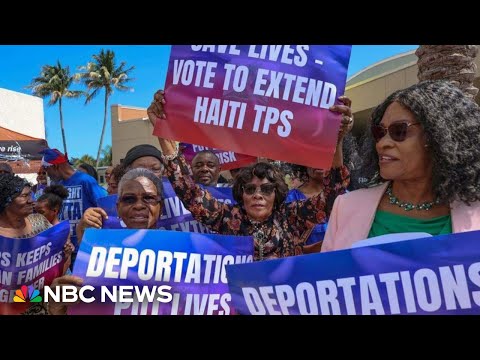
The Supreme Court just handed the Trump administration one of its biggest immigration victories yet — and if you know anyone on Temporary Protected Status (TPS), or work in healthcare, this one hits close to home.
Here's the quick backstory: TPS is a program Congress created in 1990 that lets immigrants from countries hit by war, natural disasters, or other crises stay and work legally in the U.S. — as long as it's too dangerous for them to go home. Think Haiti after its catastrophic 2010 earthquake, or Syria during its brutal civil war. Congress designed it to allow fully vetted migrants to remain and work legally if they can't return safely, and every president — Republican or Democrat — had embraced it, until now.
The ruling itself came down 6-3 on strict ideological lines. The court's conservative supermajority ruled that the president has virtually unchecked power to end the TPS program. Specifically, the case centered on roughly 350,000 Haitians who were granted TPS status in 2010 after a devastating earthquake, and roughly 7,000 Syrians granted TPS status during that country's civil war.
The most consequential part of the ruling isn't just about those two groups — it's what it means going forward. The court allowed the Trump administration to move forward with canceling TPS for Haiti and Syria, but it also underscored that the Secretary of Homeland Security alone decides whether to grant or end someone's status — and it's not up to the courts to weigh in. That gives the Trump administration space to strip TPS from hundreds of thousands more people.
The Trump administration has already terminated TPS for 10 countries, so far affecting more than a million people. Four countries still have TPS designations but are set to expire later this year: Lebanon, El Salvador, Sudan, and Ukraine.
So who are we actually talking about? A third of those 350,000 Haitians work in the U.S. healthcare sector — caregivers and doctors. Republican Rep. Mike Lawler of New York warned that revoking TPS would create a crisis in hospitals and nursing homes given the number of Haitian TPS holders working in healthcare.
The ruling means the president can end protected status for Haitians and Syrians without possibility of judicial review. Migrants living legally in the U.S. from those countries will likely revert to illegal status, losing their jobs and facing deportation — with many forced to leave American-born children behind.
Could Congress fix this? Technically yes. The House of Representatives did pass a bill to extend TPS status for Haitians, but even if it were to pass the Senate, Trump would almost certainly veto it.
The dissent was sharp. Justice Elena Kagan, writing for the liberal dissenters, accused the majority of soft-pedaling Trump's comments about Haitians, writing: "The statements fairly shout, in their racial undertones and overtones alike, that race entered into the president's resolve to remove Haitians from this country." The majority disagreed, with Alito saying the administration's across-the-board opposition to TPS as a program provided a sufficient race-neutral explanation.
What happens next is still murky — it's not yet 100% clear which legal challenges still stand, and that will play out over the coming days and weeks. For many people, it's also unclear exactly when they'll no longer be able to legally work in the U.S.
The bottom line: the Supreme Court has essentially told the executive branch it can dismantle TPS with almost no judicial guardrail. For over a million people who have built lives, careers, and families here over decades, the clock is ticking.
Claude’s Scrutiny
The majority's claim that ending every TPS designation is 'race-neutral' because Trump just broadly opposes the program is doing a lot of heavy lifting — it's a legal rationale the dissent (and a lower court) found implausible, and NPR largely lets it pass without pressing on the evidentiary record.
Key Takeaways
- The Supreme Court ruled 6-3 that the president has near-unchecked power to end TPS — with no meaningful judicial review allowed.
- The immediate ruling covers ~350,000 Haitians and ~7,000 Syrians, but it clears the path to strip protections from hundreds of thousands more across other countries.
- About a third of affected Haitian TPS holders work in U.S. healthcare — this isn't just an immigration story, it's a healthcare workforce story too.
- Congress could technically step in, but Trump has said he'd veto any extension bill, making a legislative fix effectively dead on arrival.
- Four countries — El Salvador, Lebanon, Sudan, and Ukraine — still have active TPS designations expiring later this year and are now firmly in the crosshairs.
Related videos
Perspectives
-
Leads with humanitarian impact and prominently features voices from immigrant advocacy organizations; less focus on the administration's legal rationale.
-
Follow-up piece that zooms out to explain what's at stake for the broader TPS program and remaining 270,000 holders — the most forward-looking of the NPR pieces.
-
Straight news wire-style coverage; notably includes the plaintiffs' personal statements and the discrimination allegations from lower court proceedings.
-
Most thorough on the legal mechanics — specifically unpacks how this ruling goes further than earlier shadow-docket TPS decisions and what judicial review means in practice.
-
Clearly advocacy-forward; provides the most precise breakdown of TPS numbers by country and explicitly argues the ruling enables 'pretextual decisions' by the administration.
-
Balanced AP-sourced wire report; one of the few outlets to note the metering/asylum ruling as a companion decision without conflating the two.
-
Focused on the legal procedural history and DHS decision-making timeline; gives the most space to the administration's own legal arguments.
My Notes
Sloth is free. If it’s useful, you can help keep it running.