Trump Tells Congress the Iran War Is Back On — With a Naval Blockade and a 20% Shipping Fee
So here's what's going on: the U.S.-Iran conflict that supposedly ended with a ceasefire back in the spring is officially back on. President Trump sent Congress a formal letter (required by a 1973 law called the War Powers Resolution, which forces the president to tell lawmakers within 48 hours of starting military action) saying the U.S. resumed strikes on Iran on July 7. The reason: Iran allegedly attacked oil tankers and commercial ships in the Strait of Hormuz — a narrow, critical waterway that a huge chunk of the world's oil passes through — which the administration says violated the truce both sides had signed just last month.
Why does a strait halfway across the world matter to you? Because whenever there's fighting near Hormuz, oil prices jump — and oil rises after Trump reimposes Hormuz blockade, crude hit its highest price in about a month right after this news broke. So this could show up at the gas pump.
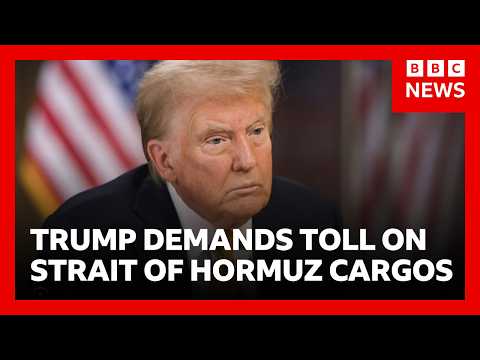
Here's the wild part: Trump also announced on Truth Social that the U.S. is bringing back its naval blockade of Iranian ports, and — in a real head-turner — said the U.S. will now charge a 20% fee on all cargo shipped through the strait, calling America the "guardian" (or as he put it to Fox News, maybe the "guardian angel") of Hormuz. He argued Trump has previously floated the possibility that the U.S. could charge money to transiting commercial vessels in the strait, and that after years of protecting the waterway for free, it's time to get paid.
There's a big irony here: for months, the U.S. (including Secretary of State Marco Rubio) has insisted that charging tolls on an international waterway is flatly illegal — that's existing international law, as Rubio put it. Iran had wanted to charge its own tolls, and Washington called that a no-go. Now Trump wants to do the exact same thing, and the UN's maritime regulator says there's no legal basis to introduce mandatory tolls for transiting a strait. Iran's foreign minister shot back that Iran, not the U.S., controls the strait and should be the one getting paid, though he did knock the 20% figure as "too much."
On the Capitol Hill side, this reignites a fight over who actually controls war decisions. Congress passed a resolution last month trying to limit Trump's ability to keep striking Iran without their approval, but it was largely symbolic and didn't force troops out. Republican Rep. Thomas Massie says the administration is basically gaming the system, telling reporters they're literally trying to steer around the 60-day clock by pretending you can play stop-start and restart it. Democratic Sen. Adam Schiff argues the administration's legal reasoning has no foundation in law. Meanwhile, nobody — not the White House, not shipping companies, not insurers — actually knows how this 20% fee would even work in practice.
Claude’s Scrutiny
The 20% fee is a Truth Social proclamation with zero legal framework, enforcement mechanism, or even a target of who pays it — treat it as a threat/negotiating tactic, not policy, especially since Trump's own State Department called an identical Iranian toll illegal weeks ago.
Key Takeaways
- The ceasefire is dead: Trump told Congress U.S. strikes on Iran restarted July 7 after Iran allegedly hit oil tankers in the Strait of Hormuz.
- Trump wants the U.S. to charge a 20% fee on all cargo through Hormuz — the exact toll idea the U.S. previously called illegal when Iran proposed it.
- The U.S. is also reinstating its naval blockade specifically targeting Iranian ships and customers, while claiming other countries get 'fair and open' passage.
- Congress and the White House are clashing over war powers again — Republicans and Democrats both question whether Trump can legally keep this going without a new vote.
- Nothing about the fee is finalized: no executive order, no legal basis, no process for shipowners or insurers — it's a proposal, not a working policy yet.
Related videos

Perspectives
-
The original source; focuses tightly on the War Powers Resolution letter and the Capitol Hill legal fight over whether Trump can restart the 60-day clock.
-
Most detailed on the toll's legal contradiction, quoting Rubio's own past statement that fees on the strait violate international law.
-
Leans on direct Trump quotes and Iranian pushback, framing it as a tit-for-tat standoff over control of the strait.
-
Gives the most space to Iran's military and diplomatic response, plus wider regional fallout (strikes on Bahrain, Jordan, Kuwait, Oman).
-
A maritime trade outlet that emphasizes how unresolved and unworkable the fee plan is for shippers, insurers, and port authorities.
-
Places more weight on the War Powers Act's 60-day mechanics and frames Trump's toll announcement as a 'seeming policy reversal.'
My Notes
Sloth is free. If it’s useful, you can help keep it running.