Small Plane Crashes Into Beijing's Tallest Skyscraper — China Imposes Information Blackout
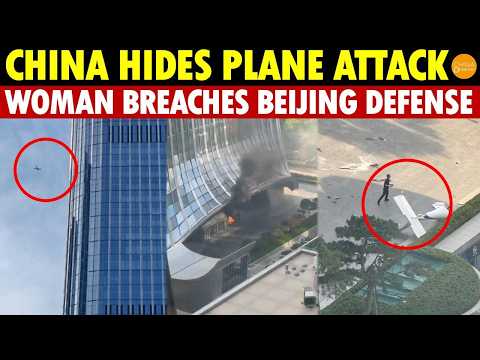
On Friday afternoon, June 26, 2026, a small plane slammed into CITIC Tower — Beijing's tallest skyscraper — and the Chinese government's immediate response was to act like it never happened.
Here's what we know: A small aircraft about the size of a car struck the 108-story tower, also called China Zun, right in the heart of Beijing's central business district. The building stands 1,732 feet tall and serves as the headquarters of CITIC Group, a massive state-owned financial conglomerate. Flight tracking service Flightradar24 identified the plane as a Sunward SA 60L Aurora — a lightweight, two-seat aircraft typically used for pilot training — that took off from an airport roughly 30 miles east of the city. It headed west, significantly deviated from its planned route, and ended its flight path in the worst possible way: punching a visible hole through the glass facade of one of the most recognizable buildings in China.
Witnesses heard a loud bang just before 6 p.m. local time, then watched debris rain down from the upper floors onto the streets below. A person inside the building confirmed to the AP that a crash had occurred and that fire alarms went off — but spoke only on condition of anonymity, out of fear of retaliation. Fire trucks, police, and ambulances flooded the scene. Workers evacuated quickly. One woman told South China Morning Post she ran out without her ID or bag.
Now here's the part that really stands out: Chinese authorities went into near-total information lockdown almost immediately. Police cordoned off roads around the tower, prevented bystanders from filming, and asked witnesses to delete any photos they had already taken. State broadcaster CCTV — whose headquarters is literally across the street — had not reported on the incident more than seven hours later. Videos and social media posts about the crash were actively scrubbed from China's domestic internet. A few clips escaped through X (formerly Twitter) and other platforms before censors could catch them.
As for why this matters beyond the spectacle: Beijing's airspace is among the most tightly controlled in the world. Civilian flights, especially small aircraft, are generally prohibited over the city's core. Just last month, Beijing went even further by banning the sale and operation of consumer drones within the capital entirely. So a small plane making it all the way into the central business district and hitting one of the country's most prominent buildings is not just a tragedy — it's a glaring security failure.
Analysts are already flagging the proximity of the flight path to Zhongnanhai, the heavily guarded compound that serves as the nerve center of China's top leadership. One longtime China watcher noted on X that the plane could have been only seconds away from that compound, calling it a potential 'earthquake' for Beijing's security apparatus.
As of this writing, the cause of the crash — whether it was pilot error, a medical emergency, or something else — is unknown. The identity of the pilot is unknown. Casualty figures are unknown. What IS known is that China's instinct was to control the story before most of the world even knew there was a story.
Claude’s Scrutiny
The 'information blackout' framing is solid, but Fox's headline bakes in a deliberate cover-up as fact — when, hours in, it could still partly reflect the chaos of an unfolding emergency rather than pure censorship. Worth holding that distinction.
Key Takeaways
- A small Sunward SA 60L Aurora training plane — typically a two-seater — crashed into Beijing's 108-story CITIC Tower on June 26, 2026, punching a visible hole in the skyscraper and sending debris to the streets below.
- Chinese authorities imposed an almost immediate news blackout: police confiscated photos, state TV stayed silent for hours, and content about the crash was scrubbed from China's domestic internet.
- Beijing's airspace is among the most restricted in the world, and the plane's flight path reportedly brought it dangerously close to Zhongnanhai — the compound housing China's top leadership — alarming security analysts.
- Key facts remain unknown: the cause of the crash, the pilot's identity, and the full casualty count had not been officially confirmed at the time of reporting.
- The plane was apparently registered to a flight training company, and flight data suggests it significantly deviated from its planned route before impact — but that data has not been independently verified.
Related videos

Perspectives
-
Leads hard with the 'information blackout' angle and prominently notes the White House was contacted for comment — a framing choice that leans into U.S.-China tension more than other outlets.
-
More cautious in its language — stressing that images 'could not be independently confirmed' and were 'quickly removed,' emphasizing epistemic limits over dramatic framing.
-
Grounded in Reuters wire reporting and eyewitness accounts; notable for the detail that police asked witnesses to delete their photos on the spot.
-
Most expansive on the geopolitical and security implications, including analyst quotes about Zhongnanhai proximity and China's 'low-altitude economy' policy tensions.
-
AP-sourced and the most grounded in verifiable specifics — Flightradar24 flight path data, the plane's model, and the insider account from a building worker who spoke anonymously.
-
Had a journalist on the ground near the scene and was among the first to identify the aircraft's ownership link to a local general aviation company.
My Notes
Sloth is free. If it’s useful, you can help keep it running.