Britain Passes One of the World's Toughest Social Media Bans for Kids
If you have kids, or you're close to anyone who does, this one's worth paying attention to.
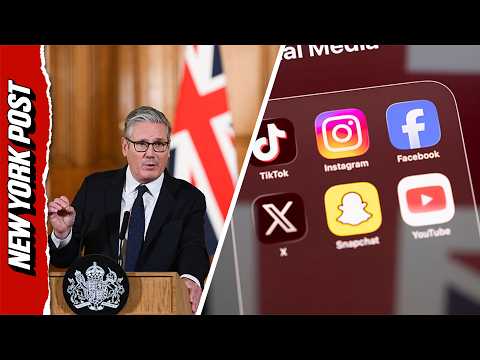
British Prime Minister Keir Starmer announced on June 16, 2026 that the UK will ban children under 16 from using major social media platforms — and he's not messing around. We're talking TikTok, Instagram, YouTube, Snapchat, Facebook, and X, all off-limits for anyone under 16. Messaging apps like WhatsApp and Signal are exempt, and so is YouTube Kids.
But here's what makes this more than just another headline about screen time: the UK isn't just copying what Australia did. Starmer says Britain is going further. Beyond the blanket ban, the government also plans to block harmful features like livestreaming and the ability for strangers to contact children — even on gaming platforms. They're also mulling overnight curfews on social media and forced breaks in infinite scrolling for under-18s. AI chatbots designed to simulate romantic or sexual relationships? Restricted to adults only.
Starmer put it plainly: "Social media is making children unhappy." He has two teenage kids of his own, and he's framing this as a parenting issue as much as a policy one. The government ran a public consultation that pulled in 116,000 responses — the second-biggest response to any government survey since the same-sex marriage debate in 2012. More than 90% of respondents backed the under-16 ban, and over 83% of parents said the risks of social media outweigh the benefits for kids.
The plan goes to Parliament before Christmas, with protections expected to kick in spring 2027. Crucially, the enforcement burden falls on the tech companies, not the kids. Platforms that don't take "reasonable steps" to keep under-16s off their services face hefty fines. The government says it plans to "learn from Australia" by making it much harder to bypass age checks.
And that brings us to the big question everyone's asking: will it actually work? Australia became the first country to implement this kind of ban back in December 2025 — and the early results are rocky. Around 7 in 10 parents surveyed by Australia's internet regulator said their kids still had accounts on restricted platforms after the ban took effect. No Australian tech company has been fined for non-compliance yet. Starmer acknowledged the challenge, but pushed back: his analogy was that we don't abandon alcohol age laws just because some teens find a way to get a drink.
Tech giants aren't thrilled. YouTube and Meta both warned that blanket bans could push kids away from monitored, curated platforms and into darker, unregulated corners of the internet. The US Embassy in London chimed in too, expressing concern the rules could burden American tech companies and infringe on free speech.
The UK is part of a fast-growing wave: Australia, Canada, Brazil, Indonesia, France, Spain, Denmark, and South Korea are all in various stages of restricting kids' social media access. Britain is pitching itself as the toughest version yet. Whether it can actually enforce that ambition is the open question — and the answer won't come until at least 2027.
Claude’s Scrutiny
The "90% of respondents supported the ban" stat sounds overwhelming — but this was a self-selected public consultation, not a randomized poll, meaning people with strong opinions (mostly worried parents) were far more likely to respond. That number deserves a serious asterisk.
Key Takeaways
- The UK is banning under-16s from TikTok, Instagram, YouTube, Facebook, Snapchat, and X — but WhatsApp, Signal, and YouTube Kids are exempt.
- This goes further than Australia's ban by also blocking livestreaming, stranger contact on gaming platforms, and romantic AI chatbots for anyone under 18.
- Enforcement targets the tech companies, not the kids — platforms face major fines for failing to keep minors out.
- Australia's ban, the world's first, has a worrying track record: roughly 70% of kids who had accounts before the ban still had them months later.
- The legislation heads to UK Parliament before Christmas 2026, with the ban expected to take effect spring 2027.
Related videos
Perspectives
-
Focused on how the UK's approach differs from Australia's and led with the enforcement challenge — the most analytically framed of the major outlets.
-
Gave the broadest global context, listing the most countries studying similar bans, and was the most even-handed on the debate between supporters and critics.
-
Highlighted the companion £132.5 million government program funding offline activities for kids — a detail most outlets skipped entirely.
-
The only outlet to flag the US Embassy's formal objection, framing this as a potential US-UK tech trade tension point.
-
Humanized the story most, specifically naming Ellen Roome — a mother whose 14-year-old son died after an online challenge — as a supporter of the ban.
-
Leaned into the tech-company-vs-government framing and gave more space to the US Embassy's free speech concerns than other outlets.
My Notes
Sloth is free. If it’s useful, you can help keep it running.