Google Maps Rolls Out "Lake America" Label After Trump Executive Order
So here's the latest in the ongoing saga of Trump renaming things on maps: Lake Ontario is now "Lake America" — at least if you're checking Google Maps from the US.
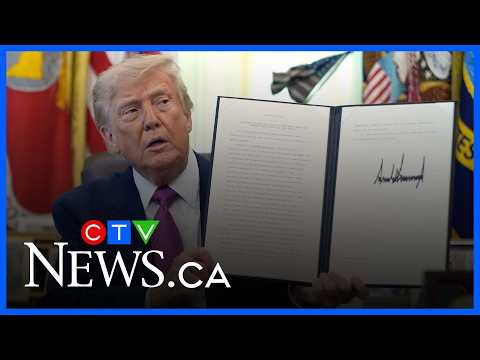
A bit of backstory: Trump signed an executive order last Thursday (this all happened amid an escalating trade war and tariff fight with Canada, plus some public sparring with Ontario's Premier Doug Ford) directing his Interior Secretary, Doug Burgum, to officially rename Lake Ontario to "Lake America" in the federal government's geographic naming database, called GNIS. That's the system the U.S. uses to standardize official place names, and once a name changes there, mapping companies like Google typically follow suit — because Google's policy is to update its maps "to reflect name changes in official government sources."
And that's exactly what happened: Google announced on Saturday that it had started rolling out the change. If you're in the U.S., you'll now see "Lake America" instead of "Lake Ontario." If you're in Canada, nothing changes for you — you'll still see "Lake Ontario." And if you're anywhere else in the world, you'll see both names, with "Lake America" in parentheses. White House Communications Director Steven Cheung celebrated the rollout on X, essentially declaring victory.
Why does this matter to you, even if you don't live near Lake Ontario? A few reasons. First, this is the second time Trump has used this exact playbook — he did the same thing with the Gulf of Mexico, renaming it "Gulf of America" back in early 2025, and Google (along with Apple and Microsoft's Bing) followed the same U.S.-only labeling approach then too. So this is becoming a repeatable pattern for how the administration flexes power over geography and, by extension, how tech companies respond to political pressure.
Second, this one's genuinely messier than the Gulf situation. Lake Ontario isn't just bordered by another country — the international boundary actually runs through the middle of the lake itself, splitting it between New York and the Canadian province of Ontario. That means, unlike the Gulf of Mexico rename, you could have two people standing on opposite shores of the exact same lake looking at two different names on their phones.
Third, this is happening against the backdrop of real economic tension — tariffs, stalled trade talks, and a public feud between Trump and Canadian leaders including Prime Minister Mark Carney. Canada has pushed back hard: Ontario Premier Doug Ford put up his own "Lake Ontario" sign in response, and Carney and New York Governor Kathy Hochul both publicly rejected the new name. Not everyone in tech is playing along either — MapQuest flatly refused to change its labeling and instead built a joke tool letting users invent their own names for the lake, and as of this reporting, Apple Maps hadn't made the switch yet either.
So practically: if your Google Maps suddenly shows "Lake America," that's not a glitch — it's the direct result of a federal executive order, and it's part of a bigger, ongoing trade fight between the U.S. and Canada that's likely to keep generating headlines (and awkward map labels).
Claude’s Scrutiny
Worth noting: Google frames this as neutral compliance with 'official government sources,' but that database is itself controlled by the same administration issuing the order — so 'just following the data' glosses over how circular that justification really is.
Key Takeaways
- Trump signed an executive order renaming Lake Ontario to 'Lake America' for U.S. federal purposes, and Google followed suit on Maps within days.
- It's location-based: U.S. users see 'Lake America,' Canadian users still see 'Lake Ontario,' and everyone else sees both names.
- This mirrors exactly what happened with the Gulf of Mexico/'Gulf of America' rename in 2025 — same legal mechanism, same corporate response pattern.
- Unlike the Gulf, Lake Ontario's border actually cuts through the lake itself, making the split-label situation more visually awkward.
- Not everyone's complying — MapQuest refused and mocked the change, Apple Maps hadn't updated yet, and Canadian officials including Doug Ford and Mark Carney pushed back publicly.
Related videos

Perspectives
-
The original wire-style report, straightforward on the Google rollout details and quotes Google's official statement directly.
-
Focuses more on the political theater of the signing itself, including Trump's Oval Office remarks and the tense trade-talk backdrop with Canada.
-
Takes the most skeptical, explainer-style approach, questioning the legal limits of Trump's authority and comparing it to other contested-name disputes like the Sea of Japan/East Sea.
-
Tech-focused angle that highlights MapQuest's public refusal to comply and notes Apple Maps hasn't made the change yet.
-
Draws the clearest parallel to the 2025 Gulf of Mexico rename across Google, Apple, and Microsoft's Bing maps.
-
Highlights the political pushback, including quotes from Canadian PM Mark Carney and NY Gov. Kathy Hochul rejecting the new name.
-
Leans into framing the move as a legitimate assertion of naming authority tied to the trade dispute, with less emphasis on Canadian objections.
-
Digs into the unique technical/cartographic problem of the border literally bisecting the lake, unlike the Gulf of Mexico case.
My Notes
Sloth is free. If it’s useful, you can help keep it running.